Photo: Tony Webster, CC BY 2.0, via Wikimedia Commons
Thanksgiving puts more strain on a kitchen drain than almost any other day of the year. There is a roasting pan full of fat, a mountain of potato peels, a sink running for hours and, usually, a few helpful relatives who will put anything down the disposal if you let them.
Plumbers know this well. Roto-Rooter, one of the biggest US plumbing companies, has for years described the day after Thanksgiving as its busiest day of the year, and has given it the slightly unappetizing nickname "Brown Friday."
Most of those calls are avoidable. A clog on Thursday afternoon is usually down to a few predictable things, and if one does happen, a jammed disposal or a slow sink is something most people can fix with tools already in the house.
Grease is the main culprit
The single worst thing you can put down a kitchen drain is fat. Turkey drippings, bacon grease, butter and cooking oil all go down as liquid when they're hot, then cool in the pipes, stick to the walls and catch everything that comes after them. Running hot water or adding dish soap doesn't fix this. It moves the grease a few feet further along before it sets.
The same thing happens on a much bigger scale in city sewers. The giant "fatbergs" found in London's sewers, including one discovered under Whitechapel in 2017 that was more than 250 meters long, are mostly congealed fat bound together with wet wipes.
What to do instead is simple and a little boring. Pour cooled fat into an old can or jar, let it set and throw it in the trash. Wipe greasy pans with a paper towel before they go into the sink. If you're saving drippings for gravy, great, but whatever is left still goes in the can.
What the disposal really can't handle
A garbage disposal is not a blender, even though people treat it like one. It's a spinning plate that flings food against a grinding ring, and some food beats it every time.
Potato peels are the classic Thanksgiving problem. They're starchy, and a big batch turns into a thick paste that settles in the trap. Fibrous stuff like celery, onion skins, corn husks and asparagus ends wraps around the plate. Pasta and rice keep swelling with water after they go down. Bones, fruit pits and large amounts of coffee grounds or eggshells are also better off in the trash or the compost.
My own rule on a big cooking day is that peels and trimmings go straight into a bowl or bin next to the cutting board, and the disposal only gets the small scraps rinsed off plates. It is less satisfying than shoving everything down the hole, I admit.
When you do run it, use a strong flow of cold water, feed scraps in gradually rather than all at once, and keep the water running for a little while after the grinding noise stops so everything gets flushed through the trap.
How to free a jammed disposal
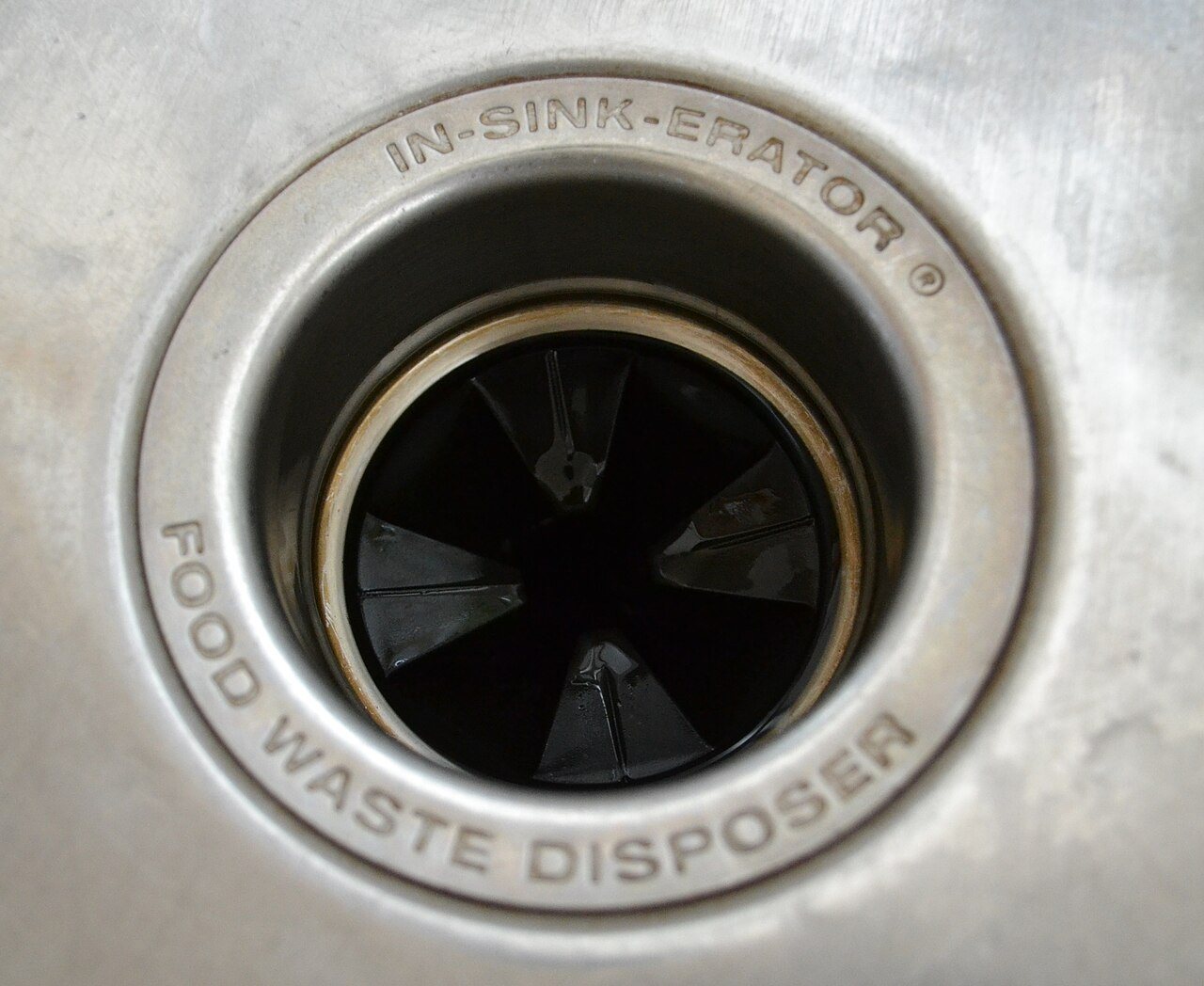
Looking down into a stainless steel sink drain at the rubber splash guard of an In-Sink-Erator food waste disposer. Photo: Oleg Alexandrov, CC BY-SA 4.0, via Wikimedia Commons
If you flip the switch and hear a hum but nothing spins, the plate is jammed. If you hear nothing at all, the motor has probably tripped its overload protection.
Safety first: turn the disposal off at the wall switch, and if it plugs in under the sink, unplug it. If it's hardwired, switch off its breaker. Never put your hand into a disposal, even when it's off. Use tongs or pliers to pull out anything you can see.
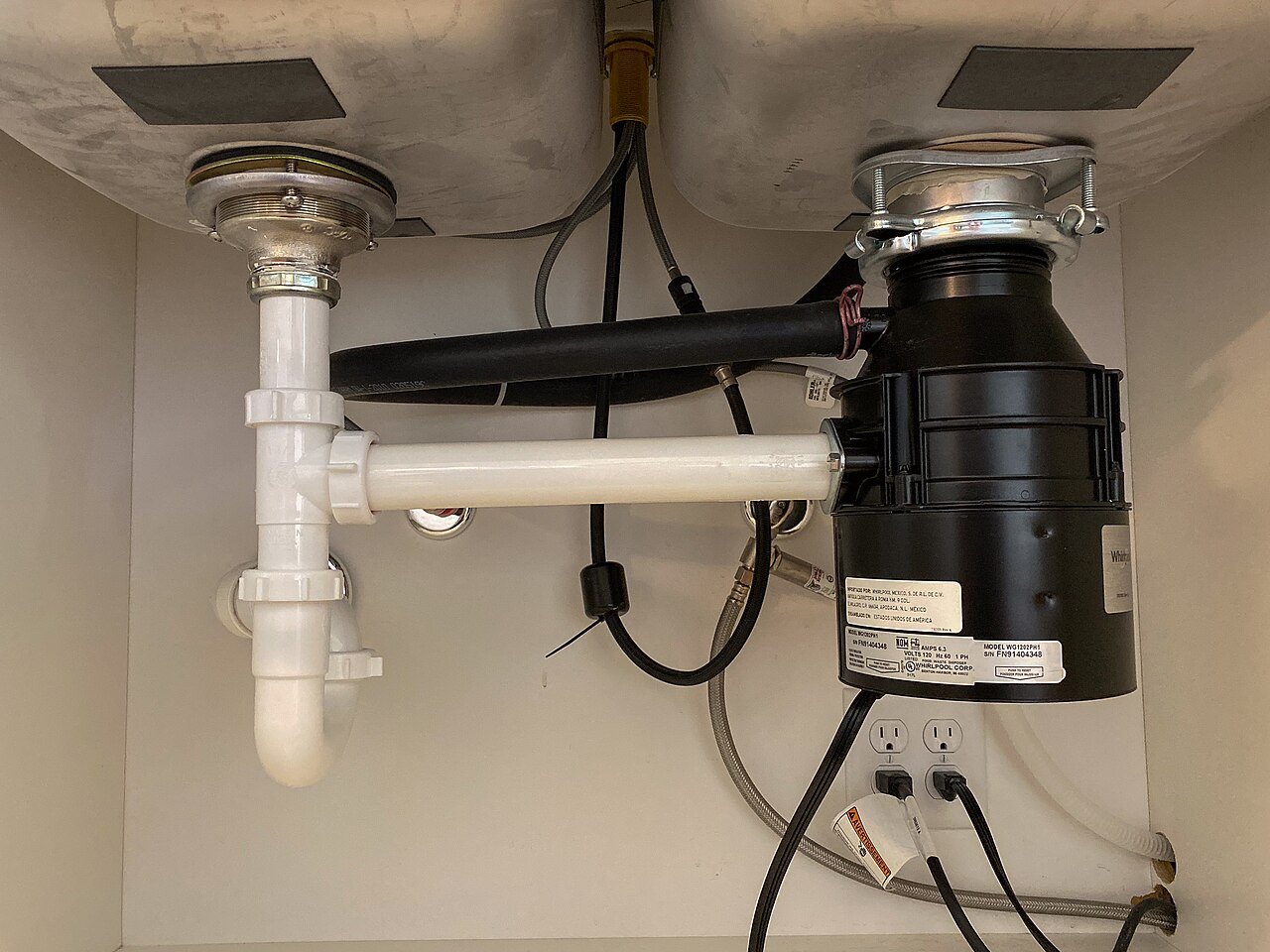
Then look underneath the unit. Most disposals have a hex-shaped socket in the center of the bottom. The matching Allen wrench often came taped to the unit or in the box, and many models take a standard 1/4-inch hex key. Fit it in the socket and work it back and forth until it turns freely all the way around. That frees the plate.
Next, find the small red reset button on the bottom or side of the unit and press it. Restore power, run cold water and try the switch. If it still hums without turning, or keeps tripping, that's the point to stop and call someone.
Clearing a slow sink without chemicals
If the sink is draining slowly, a plunger usually does more than a bottle of drain cleaner. On a double sink, block the other drain first with a stopper or a wet cloth held down firmly, or the pressure just escapes out the other side. Put a few inches of water in the clogged side, seal the plunger over the drain and give it a series of sharp pushes and pulls.
I'd skip chemical drain cleaners in a kitchen sink, and especially in one with a disposal. They're caustic, they often don't shift grease clogs, and if they fail you're left with a sink full of chemicals that you then have to plunge or take apart. If you have already used one, say so to anyone who works on the drain afterwards, and wear gloves and eye protection.
If plunging doesn't work, the next step is the P-trap, the U-shaped pipe under the sink. Put a bucket underneath, unscrew the slip nuts by hand and clean the trap out. Plastic traps usually come apart without tools. Put it back together snugly, then run water and check for drips.
A short plan for Thursday
Before the cooking starts, set out a can for grease and a bin for peels beside the sink. Run the disposal once to make sure it's working, and find the hex key now rather than at 5 p.m. with a sink full of water.
During the day, scrape plates into the trash before rinsing, and give the disposal small amounts at a time instead of one big load after dinner. And if guests offer to help with the dishes, which I hope they do, it is worth a quick word about the potato peels.
See more of us on GoogleAdd Home Knowledge as a preferred source and our stories can show up more often for you in Top Stories.