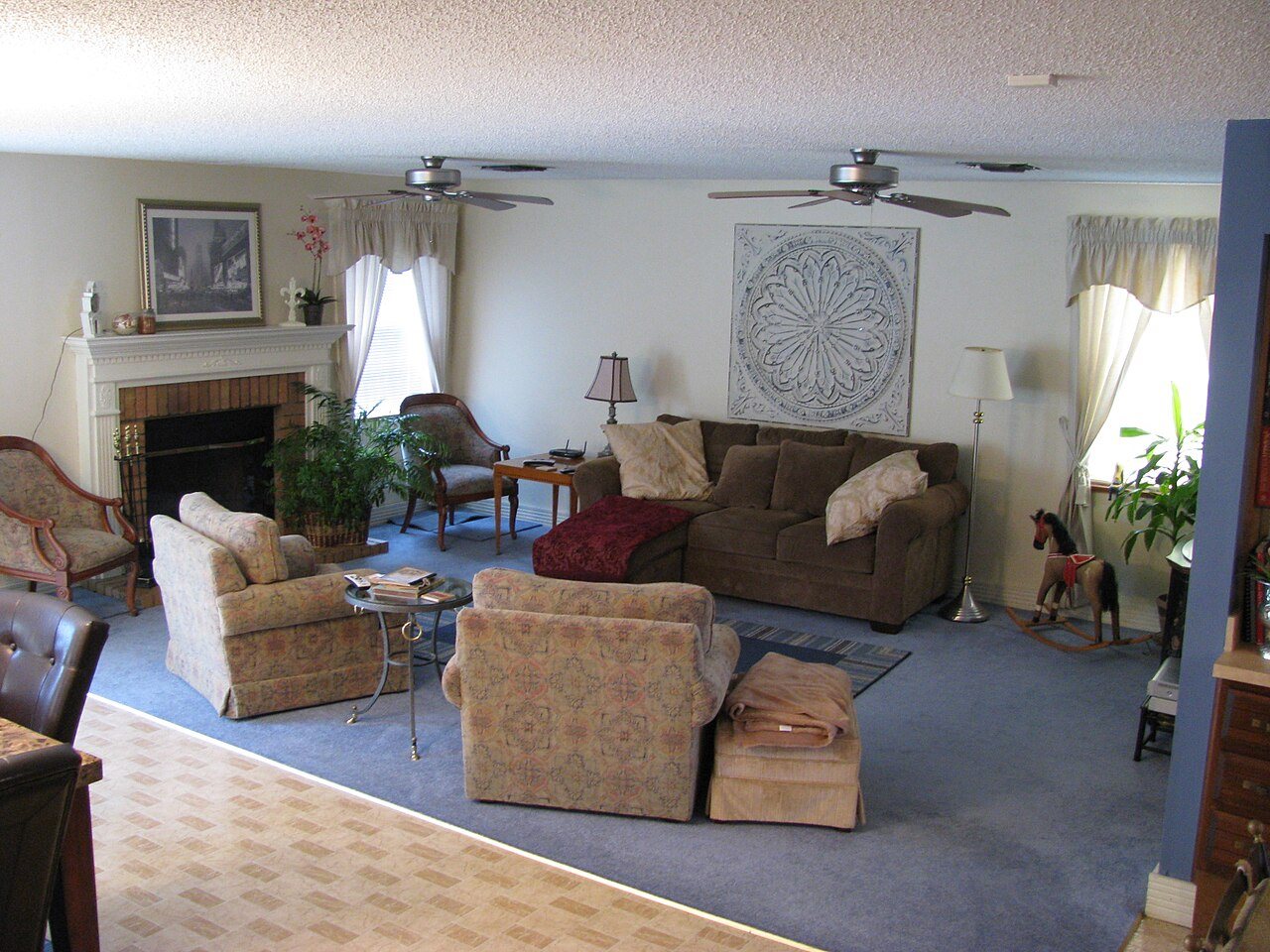
Photo: Lisa Heindel, CC BY 2.0, via Wikimedia Commons
Stand under a ceiling fan in July and you feel a breeze. Turn the same fan on in December and you get the same breeze, which is exactly what you don't want when the heat is running. The fix on most fans takes about two minutes and a step stool.
Somewhere on the motor housing of most standard ceiling fans there is a small slide switch. It reverses the direction the blades turn, and it exists because a fan can do two different jobs depending on which way it spins. A lot of people live with that switch for years without touching it. (If you've never noticed yours, you're in good company. It's small and usually painted to match the housing.)
Here's what the switch does, which way to set it for the cold months, and when to skip the whole thing.
Why the direction matters
Warm air rises. In a heated room, the warmest air collects up near the ceiling while you sit in the cooler layer below, and in rooms with high or vaulted ceilings the difference can be easy to feel.
In summer you want the fan blowing air straight down at you. Moving air across your skin makes you feel cooler, even though the fan doesn't lower the room's temperature at all. The U.S. Department of Energy says that in warm weather a ceiling fan can let you set the thermostat a few degrees higher without feeling less comfortable.
In winter you want the opposite. Running the fan in reverse at a low speed pulls air up toward the ceiling, which pushes the warmer air there out along the ceiling and down the walls, without blowing a draft on anyone. The room feels more even, and you're not paying to heat air that just sits over your head.
Clockwise for winter, counterclockwise for summer
Stand under the fan and look up.
For winter, the blades should turn clockwise. For summer, counterclockwise. If you can't tell by watching, run the fan on its highest setting for a moment and stand underneath. A strong downward breeze means it's in summer mode. If you feel very little, it's pulling air upward.
Most manufacturers follow this convention, but it's worth checking the manual for your model, since blade pitch and design can vary. If you've lost the manual, the manufacturer's website usually has it.
How to switch it safely
Turn the fan off and wait until the blades stop completely. Don't try to flip the switch while they're coasting, and don't stop them with your hand.
Get on a stable step stool or ladder, not a desk chair. Find the switch on the motor housing, usually on the side just above or below the blades, and slide it to the other position. Climb down, turn the fan back on at the lowest speed, and check the direction.
Some newer fans, especially ones with DC motors, don't have a switch at all. They reverse with a button on the remote or a wall control, so look there first before you start hunting around the housing with a flashlight.
Clean the blades while you're up there
Since you're already on a ladder, deal with the dust. Fan blades collect a surprising amount, and flipping the direction tends to throw some of it into the room.
The old pillowcase trick works well. Slide an old pillowcase over each blade, press it gently against the top and bottom surfaces, and pull it back toward you. Most of the dust stays inside the case instead of drifting down onto the sofa. Wipe the blades with a damp cloth afterward if they're sticky, which kitchen fans usually are.
If the fan wobbles when it runs, check that the screws holding each blade to its bracket are tight. If tightening doesn't fix it, a balancing kit from a hardware store is cheap and comes with instructions. A fan that still shakes badly after that, or one that hums or smells hot, should be looked at by an electrician.
When it's not worth bothering
In a small room with a standard ceiling height, the winter setting won't do much, and some people find even the low setting makes the room feel cooler. That's fine. Leave the fan off. A fan that feels drafty is working against your heating bill rather than for it.
The reverse setting earns its keep where heat pools overhead: rooms with vaulted ceilings, lofts, and anywhere a wood stove or fireplace does most of the heating. Try it for a week at the lowest speed and see whether the room feels warmer near the floor.
Since the fan only changes how the air feels to the people in the room, there's no point running it in an empty one, whatever the season. Then set a reminder on your phone for spring, when the switch needs to go back the other way.
See more of us on GoogleAdd Home Knowledge as a preferred source and our stories can show up more often for you in Top Stories.