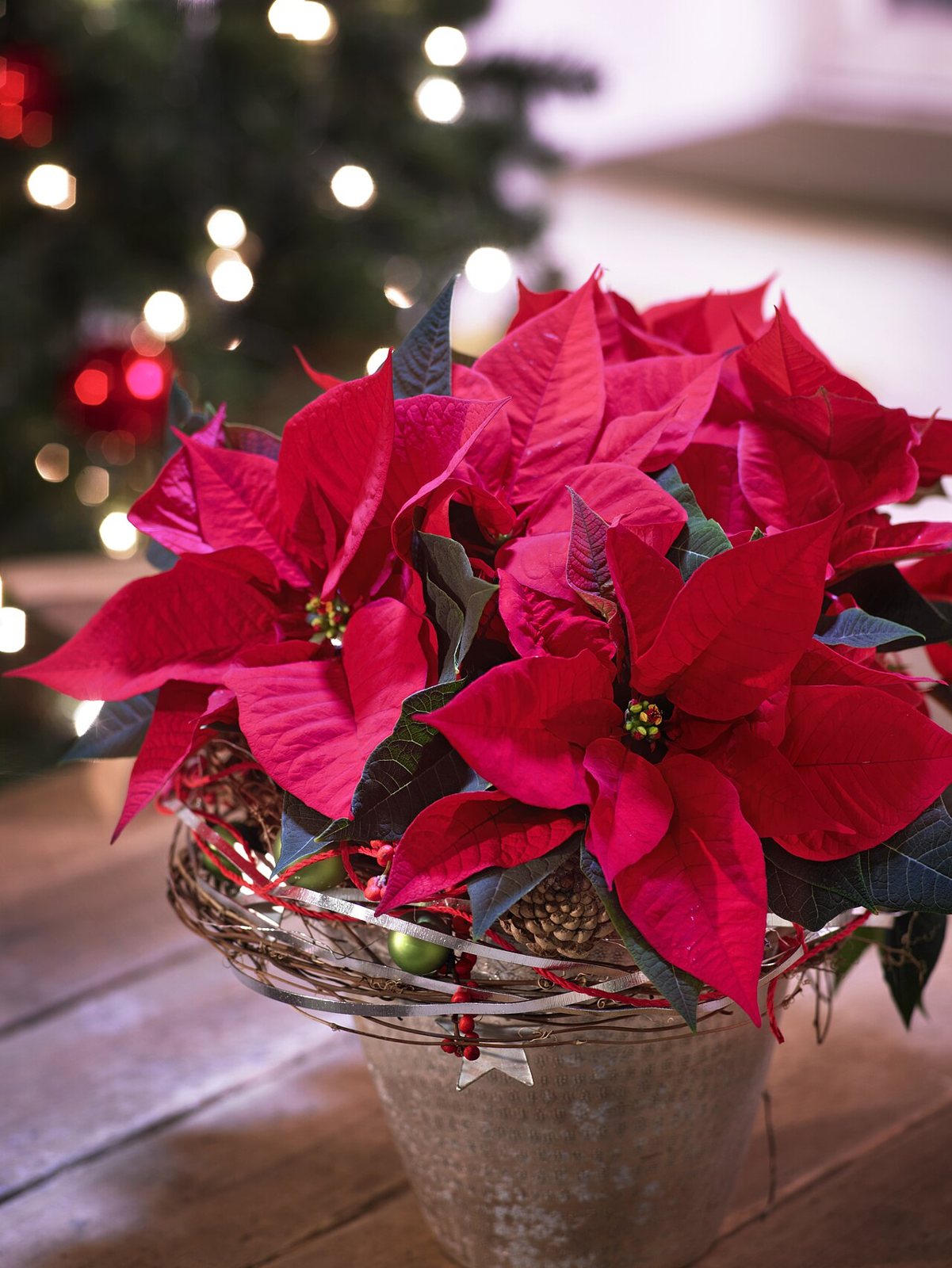
Photo: Stars for Europe, CC BY-SA 4.0, via Wikimedia Commons
The poinsettias arrive in force the weekend after Thanksgiving. Supermarkets stack them by the door in foil sleeves, garden centers fill whole greenhouses with them, and most of us bring one home without much thought. By New Year's, a fair number of those plants have dropped half their leaves and look like they've had a rough December.
It doesn't have to go that way. A poinsettia is a tropical shrub, and if you give it a few basic things it will stay full and colorful well into the new year. It also looks a lot better in a room when you treat it like a design element rather than something that landed on the counter because there was nowhere else to put it.
What you are actually buying
The red parts are not flowers. They are bracts, modified leaves that change color as the days get shorter. The true flowers are the small yellow-green buttons clustered in the center, and they are your best clue to freshness. If those little buds are still tight and greenish, the plant is early in its display. If they've opened and are shedding yellow pollen, or have dropped off entirely, it has been on the shelf a while.
The plant, Euphorbia pulcherrima, is native to Mexico and Central America, where it grows into a sizeable shrub. The Aztecs called it cuetlaxochitl. Its English name comes from Joel Roberts Poinsett, the first United States minister to Mexico, who sent plants home to South Carolina in the late 1820s. National Poinsettia Day, December 12, marks the date of his death in 1851.
Choosing a healthy plant
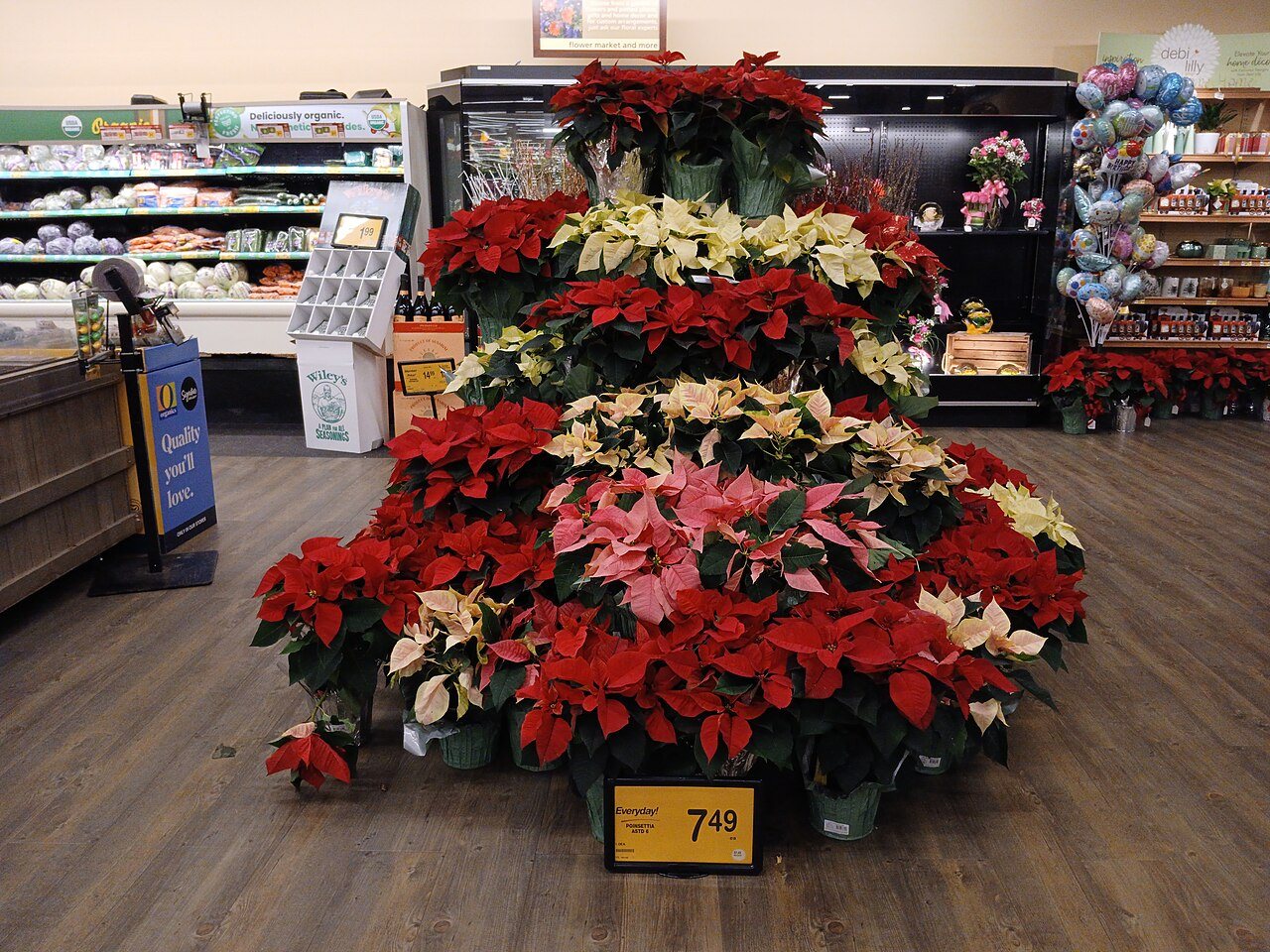
Tiered supermarket display of red, cream, pink and marbled poinsettias. Photo: Ser Amantio di Nicolao, CC BY-SA 4.0, via Wikimedia Commons
Look for dense green foliage all the way down to the soil line. Bare lower stems usually mean the plant has been underwatered or chilled. The bracts should be fully colored, with no green creeping around the edges, and the plant should look balanced from every side, including the one that was facing the wall.
Check the soil. It should be slightly moist, not soggy and not bone dry. Skip any plant displayed near automatic doors in cold weather, or crammed into a tight plastic sleeve, since poinsettias sulk when they're kept packed for long. And if it's cold out, ask for a bag or sleeve for the trip to the car. Even a few minutes below about 50°F can damage the leaves, and the damage shows up days later, which is very annoying when you can't remember what you did wrong.
Where it looks best in a room
Poinsettias are bold, and they work best when you lean into that rather than tucking a single plant in a corner. Three or five small pots grouped together on a sideboard or along a deep windowsill read as intentional. One large plant on a pedestal or plant stand gives height to a room that is mostly low furniture.
Color is worth some thought. Classic red is beautiful against white walls, natural wood and deep green. In a room with a lot of warm neutrals or soft pastels, the cream, pale pink and marbled varieties tend to blend in better. I'm partial to the white ones with plenty of greenery around them; they look more like winter and less like a store display.
Swap the shiny foil wrap for something that suits your space, such as a ceramic cachepot, a woven basket with a liner, or a plain terracotta pot. On a dining table, keep plants low enough that people can see each other over them. And keep them away from fireplaces, radiators and heating vents, however good that mantel spot looks.
Light, water and temperature
Poinsettias want bright, indirect light, ideally a spot near a sunny window where the leaves don't press against cold glass. A room that is comfortable for you, roughly 60 to 70°F during the day and a little cooler at night, suits them. Cold drafts and blasts of dry heat are what cause the sudden leaf drop people blame on the plant.
Water when the surface of the soil feels dry to the touch, and water thoroughly until it runs out of the bottom. Then empty the saucer. The foil sleeves that come on most plants trap water, so either remove the foil or poke holes in the bottom. Overwatering kills more poinsettias than anything else, and a plant sitting in a puddle of water will yellow and wilt in a way that looks confusingly like thirst.
You don't need to fertilize while it's in color.
Pets, kids and the toxicity myth
Poinsettias have a scarier reputation than they deserve. The ASPCA lists them as mildly toxic to cats and dogs: the milky sap can irritate the mouth and stomach, and a pet that chews on one may drool or vomit, but serious poisoning is unlikely. It's still sensible to keep them out of reach of a curious puppy, but you don't need to ban them from the house.
The sap can irritate skin, and people with a latex allergy may react to it, since the plant belongs to the same broad family as the rubber tree. If you prune or cut stems, wear gloves.
After the holidays
If you want to keep the plant going, it will grow happily as a green houseplant through spring and summer. Cut it back by about a third in spring, give it a sunny spot, and feed it regularly once it's putting out new growth. Getting it to color up again is the tricky part. Poinsettias need around 14 hours of uninterrupted darkness every night for eight to ten weeks, starting around early October, which means a closet or a box over it every evening without fail. Plenty of people try this once and decide that buying a fresh plant next November is a fair deal after all. I won't judge.
For now, the simplest plan works: buy a fresh plant this weekend, give it bright light and a spot away from drafts, water it only when it's dry, and enjoy it through the holidays.
See more of us on GoogleAdd Home Knowledge as a preferred source and our stories can show up more often for you in Top Stories.